Full interview was published in Portuguese on SBC Noticias Brasil.
Q. Over the past 12-24 months, has IBIA seen an increase or reduction in alerts coming from the Brazilian market? What key factors do you believe are driving this trend?
Silvia Paleari: Brazil remains one of IBIA’s most closely monitored markets, and what we are seeing is not a deterioration in integrity, but greater visibility. As more operators migrate into Brazil’s regulated framework and join independent monitoring, the volume and quality of data available to IBIA has increased substantially. This improved visibility naturally results in more issues being detected and reported; something we consider a positive sign of a maturing system. The real story here is that regulation is working. It is shining a light where none existed before and enabling faster, evidence-based action by Brazilian authorities.
Q. Which types of competitions in Brazil tend to generate the most alerts - regional leagues, national series, or niche sports? Have you identified any particular patterns in suspicious betting activity?
Silvia Paleari: Most alerts in Brazil relate to football, which reflects the sheer size and depth of Brazil’s football ecosystem rather than an exceptional integrity problem. IBIA’s Global Monitoring and Alert Platform (Global MAP) tells us that the number of alerts actually fell in the most recent quarter, and our cooperation with both sports governing bodies and regulatory authorities continues to strengthen. Occasional alerts in other sports remain isolated and should be viewed as a sign of improved monitoring coverage, not wider risk. What matters is that the framework is working; issues are being detected early, shared quickly, and acted upon by the relevant authorities.
Q. How does the integrity landscape in Brazil compare with more mature markets such as the UK or US, and with other emerging markets in Latin America?
Silvia Paleari: Brazil is progressing quickly and has already taken steps that some mature markets took longer to adopt. The requirement for licensed operators to join an independent integrity monitoring body is in line with global best practice and goes beyond what we see in many new markets. Compared with the broader LATAM region, Brazil’s structure and scale position it to become the regional benchmark in integrity.
Q. In what areas is Brazil ahead of - or lagging behind - other markets when it comes to detecting and responding to betting-related irregularities? Are there best practices from other countries that IBIA recommends Brazil adopt as a priority?
Silvia Paleari: Brazil is ahead of many emerging markets in mandating independent monitoring and engaging proactively with the integrity ecosystem. This gives the authorities immediate visibility across much of the market; something that took longer to achieve in older jurisdictions. As enforcement capacity grows, Brazil should continue to move closer to the standards seen in established regulatory environments. Key best practices include maintaining strong cooperation channels between operators, sports bodies and regulators, and ensuring fast, coordinated responses when issues arise. However, an important aspect which Brazil should focus on, and which is tighlty linked to the integrity of sports betting, is to close the gap with the illegal market. This poses an integrity threat as suspicious activities go unreported. The Brazilain regulator’s aim is to bring as many customers as possible within the regulated framework, and not to push them away. This will ensure that the integrity mechanims that the Brazilian regulator put in place will work at their best.
Q. How would you assess the current level of cooperation among operators, sports federations, and authorities in Brazil? Does IBIA identify any data or infrastructure gaps that still hinder effective detection of manipulation?
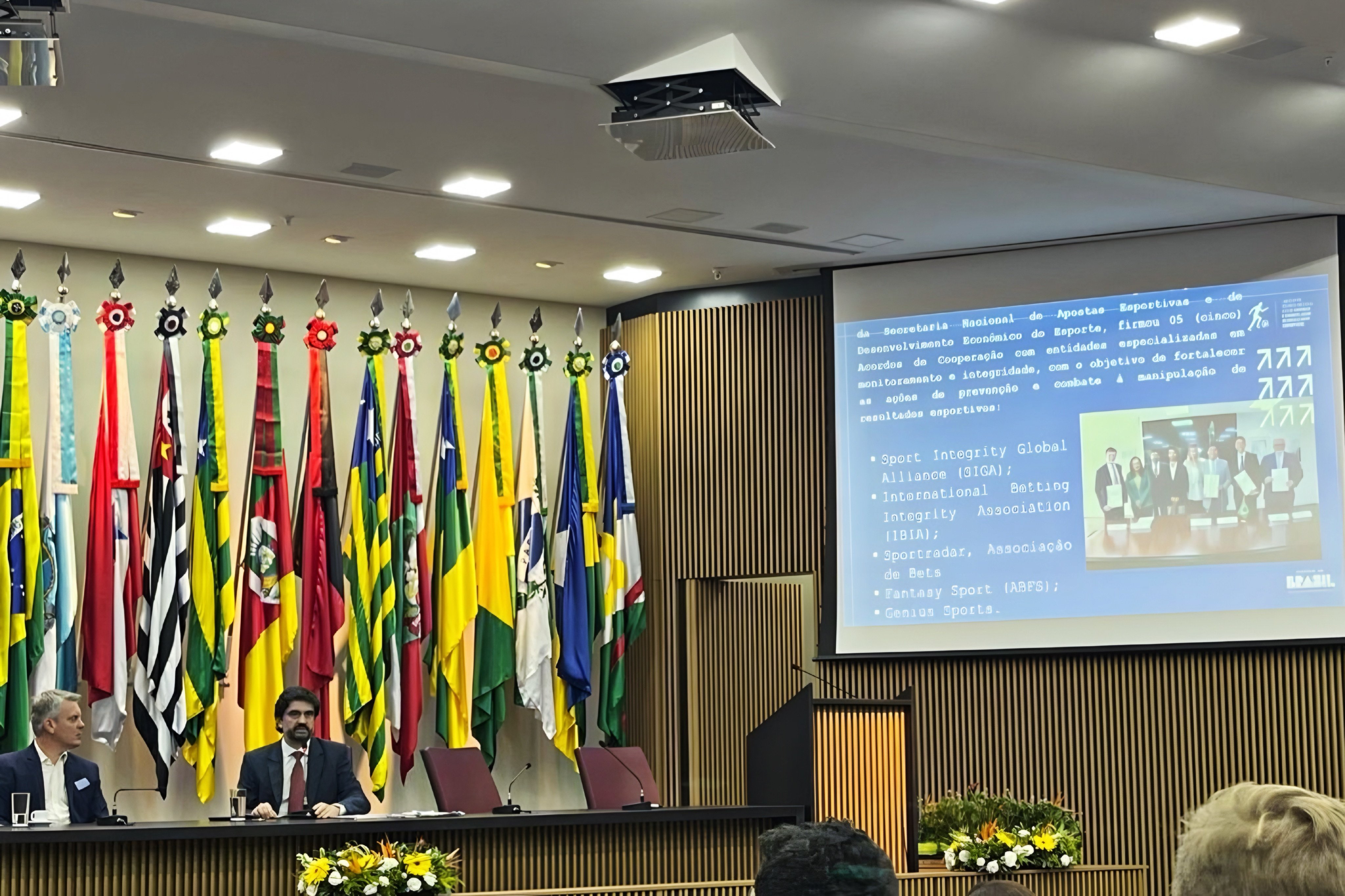
Silvia Paleari: Cooperation in Brazil has significantly deepened as the regulatory framework has taken shape, and IBIA has been closely involved in that progress. As the market opened earlier this year, we moved quickly to formalise our collaboration with the key institutions responsible for protecting the integrity of Brazilian sport. We signed Memoranda of Understanding with both the Secretaria de Prêmios e Apostas (SPA) within the Ministry of Finance and the Ministry of Sports, establishing structured channels for information-sharing and coordinated action. Importantly, this cooperation is not just formal, it is operational. Earlier this year, IBIA organised the first technical integrity training session for Brazilian authorities, bringing together representatives from the SPA and the Ministry of Finance amongst other stakeholders to strengthen their understanding of betting-related manipulation and how to respond effectively. This practical engagement is crucial in a market of Brazil’s scale. Sports organisations are also becoming increasingly attuned to the importance of betting integrity in protecting their competitions. While capacity varies across sports, the visibility provided by monitoring is helping federations understand where risks lie and how to respond. The remaining challenge is ensuring that this growing cooperation translates into consistently rapid and coordinated operational action when an alert is raised. Clear roles, agreed procedures, and dedicated investigative capacity on the ground will be essential. The framework and the intent are already in place; the next step is full operationalisation so that alerts are met with swift, coordinated, and consistent responses. Brazil is progressing and IBIA’s partnerships position us to play a central role in supporting this development. This aligns strongly with Mission 2030, which prioritises deeper collaboration, stronger monitoring capability, and more effective prevention across all regulated markets.
Q. What are IBIA’s expectations for Brazil’s sports-betting market by 2026 - particularly in terms of market growth, regulatory maturity, and integrity standards?
Silvia Paleari: By 2026, we expect Brazil to be one of the world’s most significant regulated betting markets, both in terms of size and integrity. According to our data partner H2 Gambling Capital, Brazil’s online betting and iGaming market is forecast to have around 20 million active unique players by 2026. They also project that sports betting will account for approximately 45% of the online gaming segment in Brazil in 2025. Our expectation is for Brazil to move beyond being a high-growth emerging market and become a benchmark for how to combine growth, consumer protection, and sporting integrity. This is precisely the outcome IBIA wants to see: a large, vibrant regulated market underpinned by a high-integrity framework. For this to happen, strong measures against the unregulated offer are necessarely. Also, potential tax increases pose a clear risk. Higher taxation will push consumers towards unregulated operators, reducing visibility and weakening integrity protections. Maintaining a competitive, well-channelled market is essential, and this direction of travel aligns with IBIA’s Mission 2030 strategy, which emphasises stronger monitoring capability, effective prevention, and deeper collaboration. We therefore hope that this progress is not disrupted by measures that risk pushing licensed operators offshore, as this would reduce oversight and undermine the integrity gains that Brazil has worked hard to build.
Q. What specific indicators or metrics would IBIA use to evaluate Brazil’s progress by 2026?
Silvia Paleari: We will be looking at a combination of quantitative indicators and the broader signs of system maturity. The volume and trend of alerts remains a key metric, but what matters equally is how those alerts are handled, whether they lead to thorough investigations and appropriate sanctions. Coverage is another critical factor. The effectiveness of monitoring improves every time a regulated operator is brought into the system, so we will track the proportion of the market operating within the regulatory framework and the overall level of channelisation, as strong channelisation is essential for maintaining visibility over betting activity. We will also pay close attention to response times and the quality of coordination between stakeholders, because those operational indicators often tell you more about a system’s maturity than the headline numbers do. Finally, we will look at broader market signals, such as stakeholder confidence, enforcement outcomes and the consistency of cooperation between sports, regulators and operators. These factors collectively show whether integrity measures are truly embedded in the market’s daily functioning.
Q. Will IBIA publish any Brazil-specific data or reports in 2025/2026 that can help monitor these developments? What key insights or information can people expect to find in the report?
Silvia Paleari: IBIA will continue to publish its quarterly integrity reports and annual integrity report, which remain the most comprehensive evidence-based assessments of suspicious betting activity across the global regulated market. These reports present clear, data-driven insights: the number of alerts recorded, the sports involved, regional distribution and the follow-up sanctions actioned by sports bodies and authorities. They also highlight longer-term trends, shifts in alert patterns, and year-on-year comparisons that help stakeholders understand how risks are evolving.
What stakeholders can expect is that Brazil’s alert numbers, sport-by-sport breakdowns, and comparative position within Latin America and globally will continue to appear consistently in our published reporting. As monitoring coverage in Brazil expands and if more operators enter the licensed environment, these reports will offer an increasingly detailed picture of the integrity landscape, ensuring transparency and supporting evidence-based policymaking. Transparent reporting is a core commitment of Mission 2030, and our published data will remain central to strengthening integrity standards in Brazil and globally.